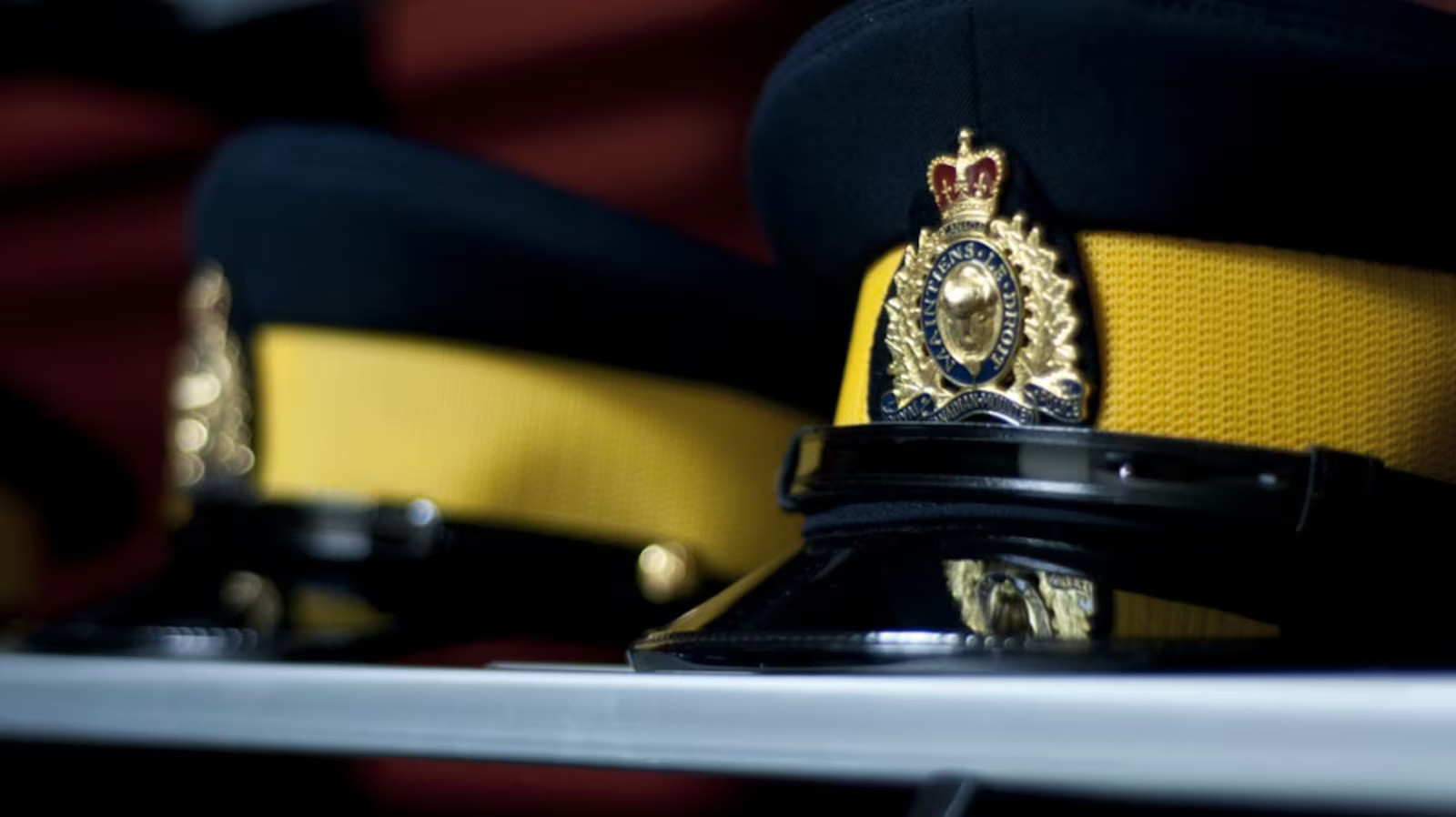
A staff sergeant with the Langley RCMP has been convicted of assaulting a man who was being booked into police cells, according to a recent judgment.
Damian Volk was found guilty in B.C. Supreme Court Tuesday after a judge-alone trial earlier this year.
“Police officers are amongst one of the few professions in society that can legally inflict force and violence and can seriously constrain individual liberties,” Justice John Gibb-Carsley wrote.
“It is crucial that in a well-functioning criminal justice system that the power is not abused or unchecked. Protecting society requires that police are held to account when they exceed their powers.”
The charge dates back to Aug. 17, 2020, when Volk was called upon to supervise the booking of Dalibor Kuzmanovic, who had been arrested after allegedly stealing from a Home Depot and fleeing the scene in a taxi.
RCMP policy at the time required the highest-ranking officer on shift at the detachment to be present when a person was being booked into police cells, the decision noted.
Volk acknowledged that his “controlled takedown” of the handcuffed man—which involved forcing him into a prone position on the floor—met the legal threshold for assault because force was applied without consent.
“The issue in this trial is whether—given the accused was acting in his role as a police officer at the time of the assault—his use of force was reasonable in the circumstances,” the judge explained.
What the court heard
One of the witnesses at trial was the arresting officer, Const. Dee, whose first name is not included in the decision.
Dee described Kuzmanovic as “placid” and “co-operative” after his arrest, during the initial search at the detachment, and in the immediate lead-up to the assault. Dee also told the court he was “shocked” by his colleague’s use of force.
Volk, on the other hand, told the court the man was “angry, irate and screaming in his face,” saying that “based on his training he expected that Mr. Kuzmanovic was escalating the situation and was going to spit, put his weight into him or headbutt him.”
Kuzmanovic died before the trial, so the court did not hear his account.
The judge was able to weigh these conflicting accounts of Kuzmanovic’s behaviour and demeanour against CCTV video, without audio, showing the entire incident.
When Kuzmanovic arrived at the detachment, with his hands cuffed behind his back, he was brought to the booking counter where he stood in a designated spot—marked by footprints on the floor—so Dee could conduct a search for weapons, drugs or other contraband, the judge said, describing the video.
“The accused interrupts Const. Dee’s search and starts to perform his own search of Mr. Kuzmanovic’s shorts. While searching the front of Mr. Kuzmanovic’s shorts, there appear to be words exchanged between Mr. Kuzmanovic and the accused,” the decision said.
“Mr. Kuzmanovic turns his head towards the accused while moving his hips slightly away from the accused. Mr. Kuzmanovic appears to say something and slightly shrugs his shoulders. The accused pauses briefly and then grabs Mr. Kuzmanovic’s right arm with his right hand and grabs Mr. Kuzmanovic’s head with his left hand and forces him to the ground. Mr. Kuzmanovic attempts to stay on his feet and the accused takes him to the ground at the end of the hallway.”
Was the use of force reasonable?
The judge found it was reasonable—given Kuzmanovic’s “imposing” stature, criminal record and reports the suspect had been arrested with a large knife—that Volk would have had “a general and initial concern” about safety during the booking process.
But the evidence, including the details captured on video, showed a “compliant” suspect who did not pose a threat, according to the judge.
To determine if an officer’s use of force is reasonable the court must ask three questions, the judge explained.
“First, what was the accused’s subjective perception of the threat against him? Second, was the accused’s subjective belief of the threat against him objectively reasonable? Third, was the accused’s response to the threat proportional?” Gibb-Carsley wrote.
The answer to all three questions in this case, the judge ruled, was no.
“Put bluntly, I do not accept the accused’s evidence that he was motivated by a safety concern when he assaulted Mr. Kuzmanovic,” the judge wrote.
“While I do not know the nuance of why the accused acted the way he did, based on the direct and circumstantial evidence before me, I find that the accused assaulted Mr. Kuzmanovic out of anger or frustration, not a concern for safety.”
While Kuzmanovic “may have questioned” Volk about his actions during the search or otherwise expressed an objection or challenge, the judge found that was not enough to justify the use of force.
“Surely, police officers who have been granted significant power in our society must have some tolerance for questions or even verbal non-compliance without resorting to heavy handed physical interventions,” the judge wrote.
Gibb-Carsley closed his decision by commending Dee for his actions.
“I expect that taking those steps to come forward and testify was not easy given the hierarchical nature of police forces,” the decision said.
“I expect that taking the actions he did required courage and conviction and a desire to improve policing. Without individuals such as Const. Dee, individual incidents can grow to become systemic issues and lead to society normalizing unacceptable behaviour.”
Source: CTV News
