In what appears to be the most significant condemnation so far from a G7 ally, France’s foreign affairs minister says the deadly boat strikes carried out by the United States in the Caribbean since early September violate international law.
The comments by Jean-Noël Barrot, made at the G7 summit of foreign ministers in Niagara-on-the-Lake, Ont., were first reported by Reuters on Tuesday evening.
The U.S. military has carried out at least 19 strikes so far against suspected drug vessels in the Caribbean and off the Pacific coasts of Latin America, killing at least 76 people. The U.S. has accused Venezuelan President Nicolás Maduro of being a narco-terrorist, with links between his administration and drug cartels, and President Donald Trump has said he has approved covert CIA operations in that country.
“We have observed with concern the military operations in the Caribbean region, because they violate international law and because France has a presence in this region through its overseas territories, where more than a million of our compatriots reside,” Barrot said.
“They could therefore be affected by the instability caused by any escalation, which we obviously want to avoid.”
Barrot’s comments came the same day as a CNN report alleged that Britain had suspended intelligence to the U.S. from its Caribbean assets, worrying about the implications of being traced to any deadly boat strikes.
U.S. Secretary of State Marco Rubio told journalists no one in the G7 meetings had raised the operations near Venezuela and that Britain had not raised concerns directly with him.
Asked about a CNN report that Britain had suspended intelligence sharing, he called it a “false story,” without going into detail, and said the United States has a very strong partnership with the United Kingdom.
Speaking to reporters later in the day, Foreign Affairs Minister Anita Anand dismissed questions about whether Canada is supplying intelligence to the U.S.
“The United States has made clear that it is using its own intelligence,” she said.
Anand said the Canadian Armed Forces co-operate with the U.S. Coast Guard, under Operation Caribe, to intercept drugs that are bound for North American shores but that Canada “has no involvement” in the U.S. strikes on Venezuelan vessels.
When asked about the French minister’s comments, she said it was “within the purview of U.S. authorities” to determine whether they are complying with international law.
U.S. ‘alienating allies’: Washington Post
Colombian President Gustavo Petro, in a social media post that shared the CNN reporting, said he had ordered his security agencies to stop sharing intelligence with U.S. counterparts until the boat attacks stopped.
“The fight against drugs must be subordinated to the human rights of the Caribbean people,” Petro said on social media platform X.
Earlier this fall, Petro accused U.S. government officials of murder, alleging that a casualty of a mid-September strike was an innocent Colombian fisherman.
It isn’t clear if there any joint initiatives between the two administrations, but in the past the U.S. has assisted Colombia in efforts to eradicate coca plants, from which cocaine is derived.
The Washington Post’s editorial board, piggybacking off the CNN report, said in an op-ed on Tuesday evening that “in a world full of enemies, the U.S. does itself no favours by alienating allies for no good reason.”
The Trump administration, in a notice to Congress that is required under the War Powers Act, has said the military is engaged in “a non-international armed conflict” and that those on the drug-carrying boats can be considered enemy combatants.
The administration cites hundreds of thousands of drug toxicity deaths in the U.S. in recent years, even as most American consumers of drugs are willing buyers and most of the deaths are attributable to opioids.
According to experts who track international drugs, Venezuela is more known as a transshipment route from cocaine-producing South American countries like Colombia and Bolivia.
Canada not assisting in efforts
While conservative Venezuelan politician and Nobel Peace Prize laureate Maria Corina Machado is a notable exception — she told Bloomberg last month that “these deaths are the responsibility of Nicolás Maduro” — the U.S. has few international backers for its legal stance.
A spokesperson for UN High Commissioner of Human Rights Volker Türk said in October that “the intentional use of lethal force is only permissible as a last resort against individuals who pose an imminent threat to life.”
But Canada has been relatively silent on the matter, with no record of public comments on the deadly boat strikes from Prime Minister Mark Carney, Defence Minister David McGuinty or Anand, who is hosting the G7 meeting in Niagara.
In a response to CBC News on Oct. 31, a Global Affairs spokesperson said, “Canada is aware of U.S. military action in the Caribbean Sea and Eastern Pacific targeting vessels suspected of drug trafficking. We continue to closely monitor the situation; however, Canada has no involvement in these operations.”
A Department of Defence spokesperson, in a response to CBC reporter Ryan Cooke about a month earlier, noted that “Canadian Armed Forces activities under Operation Caribbe, conducted in co-ordination with the United States Coast Guard, are separate and distinct” from the current strikes being carried out by the U.S.
The Royal Canadian Navy and Royal Canadian Air Force have partnered with the U.S. Coast Guard in drug interdiction efforts in the Caribbean as part of Operation Caribbe since 2006.
‘What happened to due process?’
U.S. Democrats have not been able to get enough Republican colleagues in the Senate to join them on measures that could conceivably put a halt to the administration’s strikes, which have been condemned by a host of former military officials, as well as a civilian employee of the Department of Defence who wrote an anonymous op-ed for a U.S. military news website.
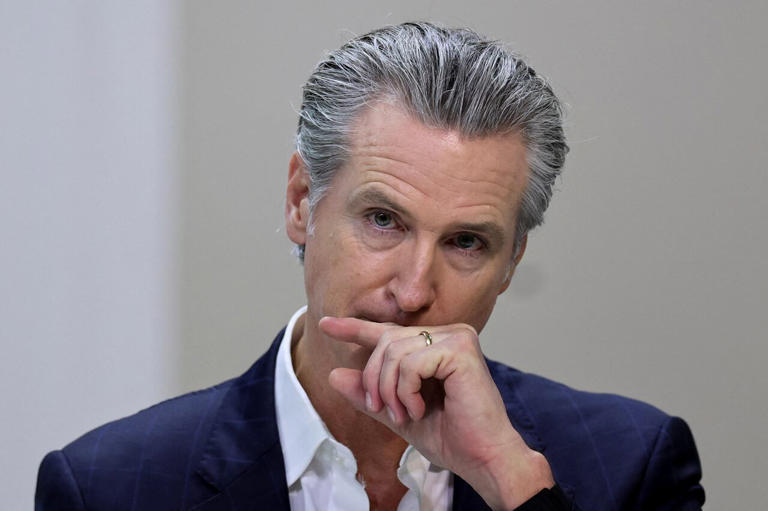
California Gov. Gavin Newsom said Tuesday at the COP30 climate summit in Brazil it was “chilling to me” to see the U.S. military blowing up suspected drug vessels.
“What happened to due process? What happened to the rule of law?” Newsom said when asked about the strikes.
The U.S. has used lethal force in the past to try and stem the flow of drugs to North America. George H.W. Bush’s administration’s launched Operation Just Cause to remove Panamanian dictator and drug trafficker Manuel Noriega in 1990, and an anti-drug operation in Peru turned disastrous in 2001 when CIA personnel mistakenly shot down a plane whose passengers included an American missionary and her infant daughter. They were both killed.
But Venezuela is a much larger country than Panama, where the U.S. had a military presence stretching back decades.
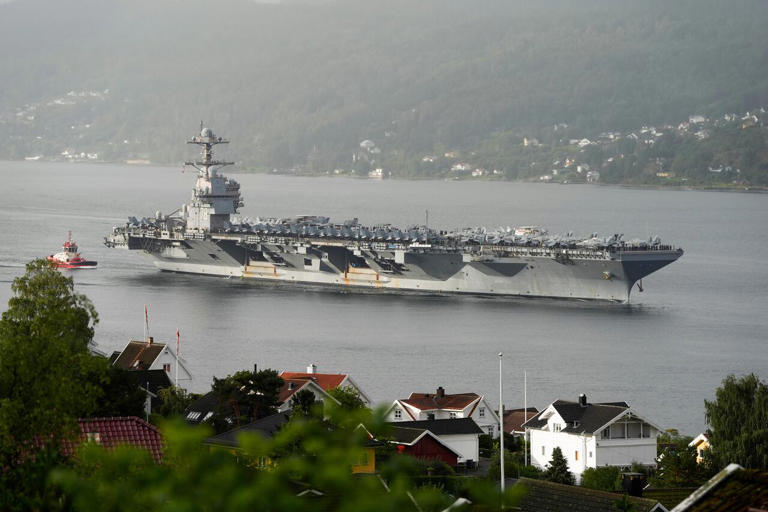
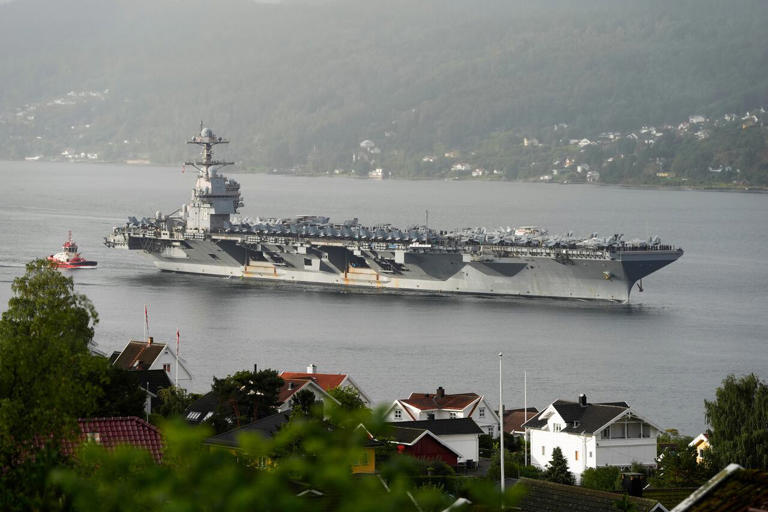
U.S. officials said on Tuesday the world’s largest aircraft carrier, the Gerald Ford, had moved into the region, adding to the eight warships, a nuclear submarine and F-35 aircraft already in the Caribbean.
While Venezuela is conducting military drills amid the buildup, six sources familiar with its military capabilities told Reuters on Tuesday that Venezuela faces significant challenges with respect to equipment and skill capacities, in addition to being a much smaller military force.
Source: CBC News
